
Shore Excursions
Planning port time effectively across multi-stop Southeast Asian cruise itineraries
Port call duration is the primary constraint in shore excursion planning. A six-hour port call supports one structured excursion with limited independent exploration time. Ports with ten or more hours allow for a booked excursion alongside independent movement. Travellers booking through the cruise line retain the vessel departure guarantee. Those arranging independent tours assume full schedule responsibility and should build a minimum 90-minute buffer before the published all-aboard time.
Contact Us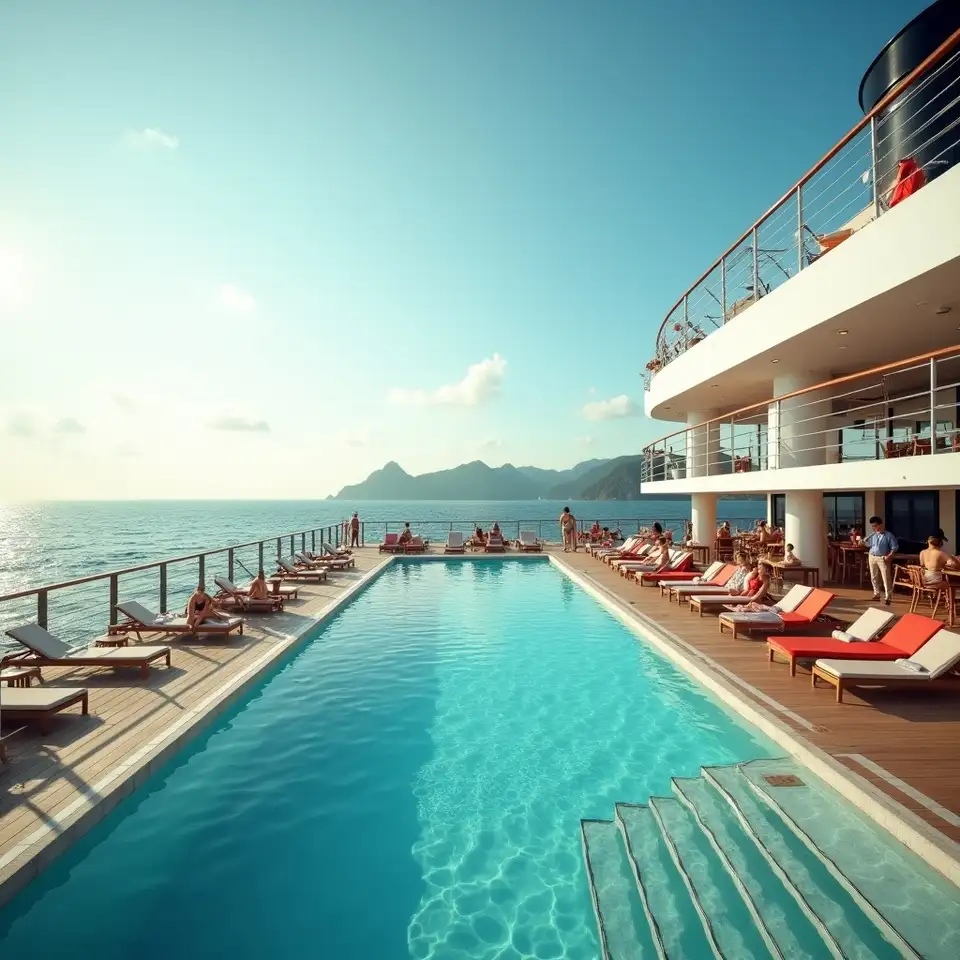
Onboard Life
What to expect across vessel tiers and cruise line categories
Onboard amenity scope is determined by vessel class and cruise line tier. Mass-market vessels prioritise volume and variety: multiple pool decks, Broadway-style theatre productions, waterslides, and a wide range of dining options across multiple price points. Premium vessels reduce passenger density and increase the quality benchmark for dining and entertainment without necessarily reducing the activity range. Luxury vessels shift the model toward personalised service, smaller guest counts, and curated programming rather than mass entertainment. Expedition vessels carry minimal entertainment infrastructure; the destination itself constitutes the primary onboard experience. Understanding which model aligns with your travel priorities before selecting a cruise line prevents post-booking dissatisfaction. Onboard timetables are published at embarkation and updated daily via printed or digital dailies distributed to each cabin. All pricing for supplementary onboard services reflects published tariffs at time of enquiry and is subject to change by the operating cruise line. Results may vary based on availability at the time of booking.
Get StartedCruise Packing Guide
Packing for a cruise voyage differs from standard hotel travel in several documented
ways. Cabin storage is compact relative to hotel rooms, and laundry availability varies
by vessel tier. Formal dress codes apply on designated evenings aboard many cruise
lines, requiring planned wardrobe allocation beyond casual daywear.
What to Pack for Different Voyage Types
-
Documentation and Essential Travel Papers for All Cruise Voyages: Carry passport, travel insurance policy, booking confirmation, and shore excursion vouchers in a waterproof document holder. Digital backup copies stored on a cloud-accessible device provide redundancy if physical documents are misplaced during embarkation or port visits.
-
Clothing Allowance Based on Voyage Length and Dress Code Requirements: Most cruise lines publish a dress code calendar indicating formal, smart-casual, and casual evenings per voyage. A seven-night itinerary typically includes one or two formal evenings. Packing one formal outfit per formal night, supplemented by smart-casual options, covers the majority of onboard dining scenarios without excess luggage volume.
-
Medication Supply Planning for Extended Ocean Voyages: Carry the full voyage quantity of prescription medication plus a minimum five-day contingency supply. Onboard medical facilities stock common over-the-counter items but cannot dispense prescription medications not already in the traveller's possession. Declare refrigeration requirements at booking if any medication requires controlled temperature storage.
-
Electronics and Connectivity Equipment for Sea Days: Cruise cabin power outlets vary by vessel nationality and construction date. Carrying a universal plug adapter and a compact multi-port USB charger covers most configurations. Satellite internet speeds onboard are insufficient for large file transfers or video conferencing; download offline content before departure for sea-day use.
-
Sun and Water Protection Gear for Port Calls and Deck Time: High-SPF sunscreen, polarised sunglasses, and a wide-brim hat are practical necessities for tropical itineraries. Port calls in Southeast Asia involve midday heat exposure during peak excursion hours. Reef-safe sunscreen formulations are required at environmentally protected snorkelling and diving sites across the region.
Why Packing Matters on Cruise Voyages
Cabin storage on cruise vessels is engineered for space efficiency rather than comfort. A standard interior or ocean-view cabin provides a wardrobe, a small safe, under-bed storage, and a bathroom with limited counter space. Balcony cabins add a small outdoor area but do not materially increase internal storage volume. Suite categories provide more floor area and additional wardrobe capacity, which is relevant for voyages exceeding ten nights. Overpacking creates a measurable problem in this context: excess luggage occupies floor space and limits cabin usability for the voyage duration. Cruise lines publish maximum luggage dimensions for onboard storage, but these are guidelines rather than enforced limits at embarkation. Travellers on back-to-back itineraries — booking two sequential voyages on the same vessel — should plan laundry schedules to reduce total clothing volume carried. Most cruise vessels offer self-service laundry facilities or valet laundry services at a supplementary per-item or per-bag charge. The cost of onboard laundry should be factored into the total voyage budget, particularly for itineraries exceeding fourteen nights. Formal evening requirements are the most common source of packing miscalculation. Mass-market cruise lines typically designate two formal evenings on a seven-night voyage. Travellers who do not pack appropriate attire are restricted from main dining room access on those evenings and must use casual-dress dining venues, which limits the onboard experience relative to what the fare includes. Reviewing the dress code policy of the specific cruise line before packing eliminates this outcome.
How Cabin Size Affects Luggage and Storage Planning
Suite-tier accommodation provides the most practical storage solution for voyages exceeding ten nights. The additional wardrobe space, larger bathroom counter, and separate living area allow travellers to organise belongings without occupying floor space. For travellers committed to a lower cabin tier, a disciplined packing list reviewed against the voyage dress code schedule and port excursion requirements produces a manageable luggage volume. Compression bags and packing cubes are functionally effective tools for maximising standard cabin storage. Checking the cruise line's luggage policy before departure confirms whether hard-shell or soft-shell cases are more suitable for the specific vessel's storage configuration.
Southeast Asia Port Profiles
Key port destinations on regional cruise itineraries departing from Malaysian ports




Understanding Cruise Fare Structures and Hidden Cost Variables
Cruise fare structures are more complex than hotel or flight pricing. The published base fare represents a starting point, not a total cost. Gratuities, port charges, specialty dining, beverage packages, shore excursions, and spa services are commonly excluded from entry-level fares and accumulate as supplementary charges throughout the voyage.
Cost Variables Every Cruise Traveller Should Confirm Before Booking
- Gratuities and Service Charge Structures Across Cruise Line Tiers: Most mass-market and premium cruise lines apply a daily per-person gratuity charge of between USD 15 and USD 20. This charge is added to the onboard account automatically unless the cruise line offers a pre-paid gratuity option at booking. Luxury-tier cruise lines typically include gratuities within the base fare. Confirming gratuity policy before booking allows accurate total cost calculation.
- Port Charges and Government Taxes Applied Per Itinerary: Port charges cover terminal fees levied by each port of call on the itinerary. These are not included in the base cabin fare on most cruise lines and are presented as a separate line item at checkout. Charges vary per port and itinerary length. Malaysian departure ports levy their own terminal fees, which are included in the port charge total presented at booking confirmation.
- Beverage Package Pricing and Included Drink Allowances: Non-alcoholic beverages are included in most cruise fares at a basic level, covering water, juice, and coffee in main dining venues. Specialty coffee, soft drinks outside dining hours, alcohol, and premium water brands typically require a beverage package or are charged individually. Package pricing ranges from USD 20 to USD 100 per person per day depending on the inclusion tier.
- Specialty Dining Supplement Charges by Restaurant Type: Specialty restaurants on mass-market and premium vessels carry per-cover supplement charges. Steakhouse, sushi, and chef's table venues typically charge between USD 30 and USD 75 per person per visit. Some cruise lines offer specialty dining packages at a flat rate covering multiple visits, which can represent a cost saving for travellers planning frequent specialty dining throughout the voyage.
- Spa, Fitness, and Wellness Service Pricing Onboard Vessels: Spa treatments, personal training sessions, and specialty fitness classes are charged at individual service rates on most vessels. Prices are comparable to land-based resort spa facilities. Some cruise lines offer embarkation-day spa packages at a reduced rate, as utilisation is typically lower on the first day of the voyage. Booking spa services on sea days risks higher demand and limited appointment availability.
- Wi-Fi and Communication Package Options and Speed Limitations: Internet packages are sold in data volume tiers or time blocks and are not included in standard cruise fares except on certain luxury-tier vessels. Prices range from USD 10 to USD 35 per day depending on the package tier and cruise line. Connection speed is satellite-dependent and is notably slower than land-based broadband, particularly in open-ocean transit zones far from coastal satellite coverage.
Total Cost Calculation
Arriving at an accurate total cost per person for a cruise voyage requires mapping
all supplementary charges against the base fare before comparison across cruise
lines. A structured cost mapping process identifies which line items are included
versus excluded per fare category, converts all charges to a common currency, and
calculates a per-night equivalent cost for comparison. This approach prevents the
common error of selecting a lower base fare that carries higher supplementary
charges than a more inclusive competitor fare.
Why Early Booking Reduces Total Voyage Cost
Early booking windows — typically six to twelve months before departure — provide access to lower cabin fares on most cruise lines. The saving on cabin cost alone can offset a significant portion of supplementary charges. Early booking also secures preferred cabin location within the selected category, which affects noise exposure, proximity to amenity decks, and natural light availability on vessels where these factors vary by cabin position.
Cruise Health and Safety Requirements
Health documentation, onboard medical facilities, and vaccination requirements vary by cruise line and destination port.
Ocean voyages present specific health and safety considerations that do not apply to land-based travel. Onboard medical facilities are equipped for stabilisation and common illness treatment but are not substitutes for hospital-grade specialist care. Travellers with pre-existing medical conditions should obtain written medical clearance from their treating physician before booking a voyage, particularly for itineraries lasting more than fourteen nights. Vaccination requirements apply at certain ports of call, independent of cruise line policy, and are enforced by local port health authorities.
Onboard Medical Facilities
Vessels carry qualified medical staff and basic diagnostic equipment. Treatment is charged at private rates not covered by standard travel insurance.
Pre-Voyage Health Clearance
Travellers with cardiovascular, respiratory, or mobility conditions should obtain written medical clearance before committing to any ocean voyage booking.
Vaccination Requirements by Port
Yellow fever vaccination certificates are required for entry at certain African and South American ports. Requirements are set by port health authorities, not cruise lines.
Motion Sickness Management
Open-ocean sea days expose passengers to vessel movement, which varies by weather conditions and vessel size. Medication options should be discussed with a physician before departure.
Cruise Travel by Season
Departure timing affects itinerary availability, pricing, and onboard experience across
regional and long-haul routes